The Animal's Language: Having the child learn so many skills the teacher could not teach him anymore was a great start to the story. Putting the skill to use repetitively was a good plot.
An Incident in Rome: 'Who is neither saved nor damned.' I was very interested to see what was in the black hole and that is what held my interest in the story.
Crivoliu's Story: The introduction is so shocking I think it takes away from the rest of the plot. I think the author should add more information about the brother and sister.
The Cat and Mouse: I thought this story had an entertaining, cute vibe. The sounds the author used to show the animals singing were very creative.
Feast Day: The scene where the dog and cat help each other get the food was very descriptive and entertaining. I couldn't help wondering what would happen to the animals if they were caught.
Buchettino: The roles between Buchettino and the ogres flipped throughout the plot. First, it seemed the Ogre had outsmarted Buchettino, but towards the end you found out it was actually the other way around.
The Goslings: The ending showed a lesson learned and a happy ending for the gosling family. I thought the metaphor for the wolf being so greedy that he swallowed them whole instead of chewing was clever.
The Cock Who Wanted to Become the Pope: I thought this story was short, but sweet. It was sad that the characters most readers would be rooting for did not get to meet their goals.
Image Information: Proud Cock, Web Source: Flickr
Bibliography: Italian Popular Tales by Thomas Frederick Crane, Web Source: Italian Unit
Showing posts with label Reading. Show all posts
Saturday, November 24, 2018
Reading Notes: Italian Popular Tales, Part A
Zelinda and the Monster: I really enjoyed the relationships in this story. The awful sisters made you appreciate the selfless daughter's actions with her father. The monster's personality had it's ups and downs throughout the story.
The Fair Angiola: The jujubes gave the story a fun side. I thought the foreshadowing of the witch wanting Angiola was well done. Having the inanimate objects be living with the potential to turn the maiden in was a great twist.
How the Devil Married Three Sisters: I thought the third sister bringing the other two out of hell benefited the plot of the story. The writer did a great job of describing every character's feelings throughout the tale.
Salt and Water: The morals behind this story are not recognized at the beginning, but that's what keeps the reader interested in the plot.
Poor Catherine: I thought making each character have their own fate was a great idea. I think most people would choose to enjoy life in their youth just in case they die young or get sick in their old age.
The Hunter, Snake, and Fox: The word usage in this story was great. 'Hunger does not observe promises' was clever and had a hint of an attitude. Foxes always seem to be helpful in stories.
Image Information: Eastern Fox Snake, Web Source: Flickr
Bibliography: Italian Popular Tales by Thomas Frederick Crane, Web Source: Italian Unit
The Fair Angiola: The jujubes gave the story a fun side. I thought the foreshadowing of the witch wanting Angiola was well done. Having the inanimate objects be living with the potential to turn the maiden in was a great twist.
How the Devil Married Three Sisters: I thought the third sister bringing the other two out of hell benefited the plot of the story. The writer did a great job of describing every character's feelings throughout the tale.
Salt and Water: The morals behind this story are not recognized at the beginning, but that's what keeps the reader interested in the plot.
Poor Catherine: I thought making each character have their own fate was a great idea. I think most people would choose to enjoy life in their youth just in case they die young or get sick in their old age.
The Hunter, Snake, and Fox: The word usage in this story was great. 'Hunger does not observe promises' was clever and had a hint of an attitude. Foxes always seem to be helpful in stories.
Image Information: Eastern Fox Snake, Web Source: Flickr
Bibliography: Italian Popular Tales by Thomas Frederick Crane, Web Source: Italian Unit
Wednesday, November 21, 2018
Reading Notes: Brothers Grimm, Part B
I really enjoyed the characters and how they interacted with one another in Bearskin. I can tell Bearskin giving the poor man money for his family will be the good turn of the story. When the sister said the wedding will be great because bears dance well made me giggle, but it was a bit confusing because before that they seemed so concerned for their sister's future marriage. I did not think the sisters deserved to die or have their souls taken.
I thought there could have been more details to help with visualizing the story. This would have been really beneficial when the half-human half-hedgehog was born. The story was sad when the father just wanted the son to die even though he wanted a child so badly. There was a comical feeling to the story, especially if you consider this sentence, "Hans the Hedgehog, however, looked after his asses and pigs, and was always merry, and sat on the tree, and played his bagpipes." I am glad Hans the Hedgehog ended up happy in his own body and found love.
Image Information: European Hedgehog, Web Source: Wikimedia
Bibliography: Household Tales by Jacob Grimm Web Source: Brothers Grimm Unit
I thought there could have been more details to help with visualizing the story. This would have been really beneficial when the half-human half-hedgehog was born. The story was sad when the father just wanted the son to die even though he wanted a child so badly. There was a comical feeling to the story, especially if you consider this sentence, "Hans the Hedgehog, however, looked after his asses and pigs, and was always merry, and sat on the tree, and played his bagpipes." I am glad Hans the Hedgehog ended up happy in his own body and found love.
Image Information: European Hedgehog, Web Source: Wikimedia
Bibliography: Household Tales by Jacob Grimm Web Source: Brothers Grimm Unit
Reading Notes: Brothers Grimm, Part A
I'm not sure why but when the married couple referred to each other as 'husband' and 'wife' I felt like the relationship was less personal, or like it was missing love. The description of the forest was very attention grabbing. Normally, the mother has a more protective relationship with children so it is interesting that the father had more remorse for making the children leave home. I find that the units with just a few stories make it easier to be drawn into the story because the characters remain the same. I thought the duck carrying the two children across the water was an excellent addition to the story I am familiar with.
I was surprised when the father gave up Thumb and did not put up much of a fight. The word usage in this story was very creative. "In this little room the windows are forgotten," said he, "and no sun shines in, neither will a candle be brought," was my favorite line. The parents realizing selling their son was a bad idea was a good ending to a long journey.
Allerleirauh contained a plot twist in the beginning of the story. I would have never guessed that the King would want to marry the daughter. I don't see how he can see this as a solution because the mother would be so upset by this. Including the father and daughter relationship before he thought to marry her would have benefited the story.
Image Information: Allerleirauh by Henry Justice Ford, Web Source: Wikipedia
Bibliography: Household Tales by Jacob Grimm Web Source: Brothers Grimm Unit
I was surprised when the father gave up Thumb and did not put up much of a fight. The word usage in this story was very creative. "In this little room the windows are forgotten," said he, "and no sun shines in, neither will a candle be brought," was my favorite line. The parents realizing selling their son was a bad idea was a good ending to a long journey.
Allerleirauh contained a plot twist in the beginning of the story. I would have never guessed that the King would want to marry the daughter. I don't see how he can see this as a solution because the mother would be so upset by this. Including the father and daughter relationship before he thought to marry her would have benefited the story.
Image Information: Allerleirauh by Henry Justice Ford, Web Source: Wikipedia
Bibliography: Household Tales by Jacob Grimm Web Source: Brothers Grimm Unit
Tuesday, November 13, 2018
Reading Notes: Robin Hood, Part B
The Bishop of Hereford: I liked when the author said 'Robin Hood dressed himself in shepherd's attire.' The repetition of 'before the king you shall go' gives the story's plot clarity.
Little John a Begging: The title alone draws my attention because Little John is a scary guy, so I am wondering who could cause him to beg and for what. While reading this story I noticed that I imagine all the characters being bubbly because of the rhyming, but they are actually fighting frequently in the stories.
The Bishop: I enjoyed reading the dialect between the old woman and Robin Hood, especially after she agrees to allow him to stay with her.
The Golden Prize: Robin Hood was able to teach someone a lesson in this story without using violence. I thought that was an interesting turn of events. I was a bit confused because I did not think the priests would get anything from hiding the money, but when he found the money he said each person can take one part.
Maid Marian: I am excited to read this story because this is the first tale based on a female character. I thought Marian was brave and clever to disguise herself and find Robin Hood. This is my favorite story from the unit.
The King: I thought the names of the towns, Fountain-abby and Barnsdale, were creative and gave the story some character. 'Taste of our green-wood cheer' was charming word usage.
The Valiant Knight: Knight Sir William sounds like a familiar character. I liked when the author described the clothing as 'glittering armour bright.' It was sad reading Robin Hood's death, but the final paragraph was a great ending.
Robin Hood's Death: Including two endings to a series of stories is very unique. I thought this ending was better because Little John was included more, and he was Robin Hood's most loyal companion so he should be.
Image Information: Movie Poster for the Robin Hood Film in 1922, Web Source: Wikimedia Commons
Bibliography: The English and Scottish Popular Ballads by Francis James Child, Web Source: Robin Hood Unit
Little John a Begging: The title alone draws my attention because Little John is a scary guy, so I am wondering who could cause him to beg and for what. While reading this story I noticed that I imagine all the characters being bubbly because of the rhyming, but they are actually fighting frequently in the stories.
The Bishop: I enjoyed reading the dialect between the old woman and Robin Hood, especially after she agrees to allow him to stay with her.
The Golden Prize: Robin Hood was able to teach someone a lesson in this story without using violence. I thought that was an interesting turn of events. I was a bit confused because I did not think the priests would get anything from hiding the money, but when he found the money he said each person can take one part.
Maid Marian: I am excited to read this story because this is the first tale based on a female character. I thought Marian was brave and clever to disguise herself and find Robin Hood. This is my favorite story from the unit.
The King: I thought the names of the towns, Fountain-abby and Barnsdale, were creative and gave the story some character. 'Taste of our green-wood cheer' was charming word usage.
The Valiant Knight: Knight Sir William sounds like a familiar character. I liked when the author described the clothing as 'glittering armour bright.' It was sad reading Robin Hood's death, but the final paragraph was a great ending.
Robin Hood's Death: Including two endings to a series of stories is very unique. I thought this ending was better because Little John was included more, and he was Robin Hood's most loyal companion so he should be.
Image Information: Movie Poster for the Robin Hood Film in 1922, Web Source: Wikimedia Commons
Bibliography: The English and Scottish Popular Ballads by Francis James Child, Web Source: Robin Hood Unit
Monday, November 12, 2018
Reading Notes: Robin Hood, Part A
Progress to Nottingham: I really enjoyed the rhyme scheme in the story. The introduction of Robin Hood's character was very attention grabbing. It is a good idea to tell where the character came from before diving into stories about them because this gives your story more depth.
John Little: It is so ironic that this big, bulky man is called 'Little John.' I really enjoyed reading how their relationship formed, and the author did a good job of independently introducing John before beginning the story.
The Ranger: 'Forester bold' is very nice word usage. I have to admit I am use to reading short stories with consistent rhyming, so reading something lengthy slightly takes away from the plot itself.
The Bold Pedlar: 'All shall gang with thee' made me smile because I thought of the common phrase 'gang' but he was just referring to his pack. I am glad no one was seriously hurt from the fight.
The Shepherd: This story was the easiest to read. I think the words flowed better, especially when there was dialogue between characters. My favorite line was: 'this hook of mine shall let thee know a coward I do hate.'
Robin Hood's Delight: I love the time descriptions in this story: midsummer's day, or 'from eight a clock till two and past.' This story seemed to take bits and pieces of The Bold Pedlar and The Shephred.
The Pedlars: 'It pierst the skin of his backe within' was great word usage. The 'trash talk' in these stories is all so entertaining.
Allen a Dale: I thought the pair up of Robin Hood and this villain, dressed in scarlet red, was a great protagonist/antagonist combo. It kind of bothered me that the name in the title was spelled differently than in the story. I did not expect a marriage to take place in the story.
Image Information: Robin Hood and Little John by Louis Rhead, Web Source: Wikimedia Commons
Bibliography: The English and Scottish Popular Ballads by Francis James Child, Web Source: Robin Hood Unit
John Little: It is so ironic that this big, bulky man is called 'Little John.' I really enjoyed reading how their relationship formed, and the author did a good job of independently introducing John before beginning the story.
The Ranger: 'Forester bold' is very nice word usage. I have to admit I am use to reading short stories with consistent rhyming, so reading something lengthy slightly takes away from the plot itself.
The Bold Pedlar: 'All shall gang with thee' made me smile because I thought of the common phrase 'gang' but he was just referring to his pack. I am glad no one was seriously hurt from the fight.
The Shepherd: This story was the easiest to read. I think the words flowed better, especially when there was dialogue between characters. My favorite line was: 'this hook of mine shall let thee know a coward I do hate.'
Robin Hood's Delight: I love the time descriptions in this story: midsummer's day, or 'from eight a clock till two and past.' This story seemed to take bits and pieces of The Bold Pedlar and The Shephred.
The Pedlars: 'It pierst the skin of his backe within' was great word usage. The 'trash talk' in these stories is all so entertaining.
Allen a Dale: I thought the pair up of Robin Hood and this villain, dressed in scarlet red, was a great protagonist/antagonist combo. It kind of bothered me that the name in the title was spelled differently than in the story. I did not expect a marriage to take place in the story.
Image Information: Robin Hood and Little John by Louis Rhead, Web Source: Wikimedia Commons
Bibliography: The English and Scottish Popular Ballads by Francis James Child, Web Source: Robin Hood Unit
Wednesday, November 7, 2018
Reading Notes: Welsh Fairy Book, Part B
Owen Goes a-Wooing- While reading this story I really got a feel for the narrator's personality. There was a surprise at the end when Owen found out he had been missing for over a month instead of hours.
The Fairy Reward: It was really easy to imagine the fairies bringing in the babies and taking care of them. I was surprised that the wife married the man before knowing how he earned his money.
Why Deunant has the Front Door in the Back: I was confused when the farmer made old Beti say "Rhad Duw ar y da" because I have no idea what that means. I thought having the man put his foot on the other's foot was a unique way of giving him a vision.
The Bride from the Red Lake: The details are very vivid when the author is describing the vision emerging from the lake. I wonder why the woman could not have clay thrown on her and why she was so happy to leave if they were happily married.
Melangel's Lambs: The introduction paragraph was very descriptive and 'dense thicket' really grabbed my attention. The second to last paragraph had a bit too much word usage and it was a little confusing.
The Men of Ardudwy: I really enjoyed the word usage in this story. 'They now feigned flight' was a beautiful description. The fighting scenes were very insightful.
Hu Garden: Afanc interested me because the monster caused a huge flood, but was easily tricked by a girl to come out and be chained up. The way they trapped Afanc at the end was very clever.
The Devil's Bridge: I thought the relationship between Megan and her cow was sweet. She was so worried about him being on the other side of the river. I really liked Megan's character because she was really smart to outwit the Devil.
The Martyred Hound: This story was so sad to read because I love dogs. I was intrigued throughout the story to see why the dog did not go on the chase and then to see where the baby was. I wish Llywelyn could have saved the hound from dying.
Image Information: Diogenes Sitting in His Tub (1860) by Jean-Léon Gérôme, Web Source: Wikipedia
Bibliography: The Welsh Fairy Book by W. Jenkyn Thomas, Web Source: Welsh Fairy Tales Unit
The Fairy Reward: It was really easy to imagine the fairies bringing in the babies and taking care of them. I was surprised that the wife married the man before knowing how he earned his money.
Why Deunant has the Front Door in the Back: I was confused when the farmer made old Beti say "Rhad Duw ar y da" because I have no idea what that means. I thought having the man put his foot on the other's foot was a unique way of giving him a vision.
The Bride from the Red Lake: The details are very vivid when the author is describing the vision emerging from the lake. I wonder why the woman could not have clay thrown on her and why she was so happy to leave if they were happily married.
Melangel's Lambs: The introduction paragraph was very descriptive and 'dense thicket' really grabbed my attention. The second to last paragraph had a bit too much word usage and it was a little confusing.
The Men of Ardudwy: I really enjoyed the word usage in this story. 'They now feigned flight' was a beautiful description. The fighting scenes were very insightful.
Hu Garden: Afanc interested me because the monster caused a huge flood, but was easily tricked by a girl to come out and be chained up. The way they trapped Afanc at the end was very clever.
The Devil's Bridge: I thought the relationship between Megan and her cow was sweet. She was so worried about him being on the other side of the river. I really liked Megan's character because she was really smart to outwit the Devil.
The Martyred Hound: This story was so sad to read because I love dogs. I was intrigued throughout the story to see why the dog did not go on the chase and then to see where the baby was. I wish Llywelyn could have saved the hound from dying.
Image Information: Diogenes Sitting in His Tub (1860) by Jean-Léon Gérôme, Web Source: Wikipedia
Bibliography: The Welsh Fairy Book by W. Jenkyn Thomas, Web Source: Welsh Fairy Tales Unit
Monday, November 5, 2018
Reading Notes: Welsh Fairy Tales, Part A
Arthur in the Cave: I really liked the way the author had the stranger and Welshman communicate with each other. I could clearly tell what the vibe of the story was and how both characters felt while speaking. The scene where the characters enter the cave and see Arthur's army required very few details of my own imagination.
Red Dragon: Asking a question as the story's title is always a good way to draw in the reader. I actually use this approach for my storybook project. The wise man describing the pool with a red and a white dragon was a really pretty image.
Enion and the Lady of the Greenwood: This story had my attention throughout. I really liked that the Goblin disguised himself as a woman and a man to trick the husband and wife. I thought this villainous idea was very creative.
March's Ears: I thought this story was a bit strange. I understand why the barber had to see the ears in order to cut his hair, but having his head cut off was a very intense threat. I am glad he came to turns with his ears at the end of the story.
Stray Cow: The first paragraph describing the lake was a great way to set the scene for the story. It gave off a gloomy, mysterious vibe. It was easy to imagine as the story progressed.
Bala Lake: 'Fertile valley' was such a different term, it threw me off when I first read it. It was foreshadowing that the prince would have a child. The ending was really impressive, the author was very descriptive of the lake and clever in having the harp floating on top.
Dick the Fiddler's Money: The relationship between the Fiddler and his wife was clearly portrayed in this story. As a drunk, he was very clever in tricking the landlord. I really liked the Fiddler's character.
St. Collen and the King Fairy: I was unsure of the meaning behind Collen's actions in this story. I did not understand why he hid in a cell so close to the people he was tired of. I also didn't understand why he got rid of the castle and everyone in it.
Helig's hollow: The author did a good job of introducing the characters in this story. There was a lot of background information provided along with the relationships between everyone.
Image Information: Illustration of two Dragons Fighting from a 15th Century Historia Regum Britanniae Manuscript, Web Source: Wikimedia Commons
Bibliography: The Welsh Fairy Book by W. Jenkyn Thomas, Web Source: Welsh Fairy Tales Unit
Red Dragon: Asking a question as the story's title is always a good way to draw in the reader. I actually use this approach for my storybook project. The wise man describing the pool with a red and a white dragon was a really pretty image.
Enion and the Lady of the Greenwood: This story had my attention throughout. I really liked that the Goblin disguised himself as a woman and a man to trick the husband and wife. I thought this villainous idea was very creative.
March's Ears: I thought this story was a bit strange. I understand why the barber had to see the ears in order to cut his hair, but having his head cut off was a very intense threat. I am glad he came to turns with his ears at the end of the story.
Stray Cow: The first paragraph describing the lake was a great way to set the scene for the story. It gave off a gloomy, mysterious vibe. It was easy to imagine as the story progressed.
Bala Lake: 'Fertile valley' was such a different term, it threw me off when I first read it. It was foreshadowing that the prince would have a child. The ending was really impressive, the author was very descriptive of the lake and clever in having the harp floating on top.
Dick the Fiddler's Money: The relationship between the Fiddler and his wife was clearly portrayed in this story. As a drunk, he was very clever in tricking the landlord. I really liked the Fiddler's character.
St. Collen and the King Fairy: I was unsure of the meaning behind Collen's actions in this story. I did not understand why he hid in a cell so close to the people he was tired of. I also didn't understand why he got rid of the castle and everyone in it.
Helig's hollow: The author did a good job of introducing the characters in this story. There was a lot of background information provided along with the relationships between everyone.
Image Information: Illustration of two Dragons Fighting from a 15th Century Historia Regum Britanniae Manuscript, Web Source: Wikimedia Commons
Bibliography: The Welsh Fairy Book by W. Jenkyn Thomas, Web Source: Welsh Fairy Tales Unit
Tuesday, October 30, 2018
Reading Notes: Native American Hero Tales, Part B
The beginning of this story, Red Woman and the Twins, was very brutal and vivid. I am wondering who Red Woman is and why she not only killed the wife, but teased the husband by mutilating her lip. I thought the names of the two boys were unique, but a little distracting while reading. The old woman and her pot was an interesting addition to the story's plot. I liked the idea of having small stories within the tale and the boys were heroes even though they disobeyed their parents countless times.
The second story includes a reoccurring theme from old tales. A father does not want to give his daughter away so easily and gives the husband challenges. This story is a little more intense because he keeps killing her spouses. The ending was a surprised, but I always enjoy when a character turns into an animal.
I had to use my imagination when reading The Jealous Father for vivid details. I did not like Aioswe's son because he let the Walrus die after he agreed to save his life. I thought having both the mother and father conjuring things to save/stop the boy from returning home was a great idea. I would not categorize anyone, except possibly the mother, in the story as a hero. It is one thing to get revenge on the man who tried to kill you, but to set the entire world on fire is a bit much.
The author included a lot of detail when describing the camp Star and Sun landed on. From the first paragraph I thought Sun and Star would be spying on the daughters and the chief, but they are sticking so well to their new characters, grandmother and grandson, it really benefits the story. I was surprised when the elder sister did not obey her father. The ending paragraph describing the younger sister's new path was so beautiful.
Image Information: Two Ravens on Wood, Web Source: Pixino
Bibliography: Tales of the North American Indians by Stith Thompson, Web Source: Native American Hero Tales Unit
The second story includes a reoccurring theme from old tales. A father does not want to give his daughter away so easily and gives the husband challenges. This story is a little more intense because he keeps killing her spouses. The ending was a surprised, but I always enjoy when a character turns into an animal.
I had to use my imagination when reading The Jealous Father for vivid details. I did not like Aioswe's son because he let the Walrus die after he agreed to save his life. I thought having both the mother and father conjuring things to save/stop the boy from returning home was a great idea. I would not categorize anyone, except possibly the mother, in the story as a hero. It is one thing to get revenge on the man who tried to kill you, but to set the entire world on fire is a bit much.
The author included a lot of detail when describing the camp Star and Sun landed on. From the first paragraph I thought Sun and Star would be spying on the daughters and the chief, but they are sticking so well to their new characters, grandmother and grandson, it really benefits the story. I was surprised when the elder sister did not obey her father. The ending paragraph describing the younger sister's new path was so beautiful.
Image Information: Two Ravens on Wood, Web Source: Pixino
Bibliography: Tales of the North American Indians by Stith Thompson, Web Source: Native American Hero Tales Unit
Monday, October 29, 2018
Reading Notes: Native American Hero Tales, Part A
The story about the Jealous Uncle wastes no time in getting into the plot of the story. I think this really grabs a readers attention. I think the author could have added a few details about the setting, especially when he was walking through the woods with his nephew. I am wondering why the uncle wants to kill his nephews so badly, but did no harm when he thought the child was a girl. I feel really bad for the unnatural uncle's wife. He was so hateful towards his family, but they always tried to forgive him.
I thought it was interesting that Grouse caused such a big mischief in the plot, but he is not struggling on the boat himself. I am surprised the group did not make a fuss to Grouse. They were mean to him, but the journey he sent them on was a bit much compared to some teasing. I did have to use my own imagination throughout the story to fill in some gaps. Personally I would not say this story has a 'hero' because the one who saved the day also bullied someone at the beginning of the tale.
I really like the lead male character in Dug-From-Ground. The relationship between the 'son' and 'mother' develops clearly through the story. I liked the idea of the main character playing a game with earthquake and thunder because it is unique and you could create a very detailed scene with those elements involved.
When animals act as people in stories, it always makes for an interesting tale. This plot takes a turn though because the animals are the villains who eat humans. My favorite paragraph was when the spider was closing up the entrance with her web. I felt like the animals were on a side and the god/humans were on another side. There was a beautiful example of word usage when the young eagles said the mother/father returns with the rain or wind.
Image Information: Image of Bald Eagle captured by Bill Buchanan, Web Source: Wikimedia Commons
Bibliography: Tales of the North American Indians by Stith Thompson, Web Source: Native American Hero Tales Unit
I thought it was interesting that Grouse caused such a big mischief in the plot, but he is not struggling on the boat himself. I am surprised the group did not make a fuss to Grouse. They were mean to him, but the journey he sent them on was a bit much compared to some teasing. I did have to use my own imagination throughout the story to fill in some gaps. Personally I would not say this story has a 'hero' because the one who saved the day also bullied someone at the beginning of the tale.
I really like the lead male character in Dug-From-Ground. The relationship between the 'son' and 'mother' develops clearly through the story. I liked the idea of the main character playing a game with earthquake and thunder because it is unique and you could create a very detailed scene with those elements involved.
When animals act as people in stories, it always makes for an interesting tale. This plot takes a turn though because the animals are the villains who eat humans. My favorite paragraph was when the spider was closing up the entrance with her web. I felt like the animals were on a side and the god/humans were on another side. There was a beautiful example of word usage when the young eagles said the mother/father returns with the rain or wind.
Image Information: Image of Bald Eagle captured by Bill Buchanan, Web Source: Wikimedia Commons
Bibliography: Tales of the North American Indians by Stith Thompson, Web Source: Native American Hero Tales Unit
Wednesday, October 24, 2018
Reading Notes: Eskimo Unit, Part B
'the blood poured from his clothes, and wherever they went, the snow was marked with blood' was very descriptive. I enjoyed the married woman's character a lot because she was willing to die to avenge her husband.
I loved the ending to this story. "Thus punishment falls upon the man who kills," is a strong way to reiterate the main point of the tale. I also enjoyed the included metamorphosis.
The attack on the village was very detailed. Navaranapaluk was punished for lying, but she sort of deserved that fate because she caused many women to die.
I thought it was interesting that two sisters were married to a whale and an eagle. I like the character choices in this story, but I was really confused at the end as to why the whale ended up in such bad shape.
I imagined a beautiful scene when the author was describing the houses and smoke holes in the story. The vibe of the story switches gears when the father rescues the son. I was afraid the people who took him would wake up.
When Atarssuaq attempted to throw his son in the water and let him learn to swim on his own, it reminded me of multiple movies I have seen where the father figure does this exact thing. A lot of these stories just tell if the characters have a strong relationship, but this author gives the background of why the father and son are so close.
I had to imagine a lot of the scenery in the story about Saunikoq and Tungujuluk on my own. I felt like the author could have added descriptions about the sea when either characters were out hunting.
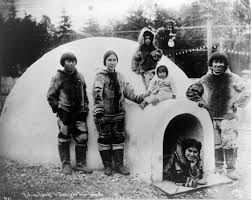
Image Information: Inuit Family and their Igloo, Web Source: Wikimedia Commons
Bibliography: Eskimo Folk-Tales by Knud Rassmussen, Web Source: Eskimo Unit
I loved the ending to this story. "Thus punishment falls upon the man who kills," is a strong way to reiterate the main point of the tale. I also enjoyed the included metamorphosis.
The attack on the village was very detailed. Navaranapaluk was punished for lying, but she sort of deserved that fate because she caused many women to die.
I thought it was interesting that two sisters were married to a whale and an eagle. I like the character choices in this story, but I was really confused at the end as to why the whale ended up in such bad shape.
I imagined a beautiful scene when the author was describing the houses and smoke holes in the story. The vibe of the story switches gears when the father rescues the son. I was afraid the people who took him would wake up.
When Atarssuaq attempted to throw his son in the water and let him learn to swim on his own, it reminded me of multiple movies I have seen where the father figure does this exact thing. A lot of these stories just tell if the characters have a strong relationship, but this author gives the background of why the father and son are so close.
I had to imagine a lot of the scenery in the story about Saunikoq and Tungujuluk on my own. I felt like the author could have added descriptions about the sea when either characters were out hunting.
Image Information: Inuit Family and their Igloo, Web Source: Wikimedia Commons
Bibliography: Eskimo Folk-Tales by Knud Rassmussen, Web Source: Eskimo Unit
Monday, October 22, 2018
Reading Notes: Eskimo Folk Tales, Part A
The first story had a very descriptive paragraph describing children crawling from the bushes. I thought 'only water would burn' and 'no day ever dawned' were examples of beautiful word usage.
I loved that people kept making a place for the bear in their community as it grew older and stronger. The relationship between him and the foster mother was a strong one.
The story about the boy with a house full of ghosts took a lot of my own imagining.
I enjoyed the way the author described the scene when Isigaligarssik shot the arrow.
'The sun was just over the houses of the village' is a really pretty description. I wonder about the relationship between the insects and the wife in this story.
The author of Atungait did a great job including natural imagery, but I found myself wondering more about their trips. I am really curious to know what foothall is.
I felt like I had to imagine what the giant dogs and people in the final story looked like on my own. So I imagined a Great Pyrennes.
Image Information: Great Pyrennes, Web Source: Wikipedia
Bibliography: Eskimo Folk-Tales by Knud Rassmussen, Web Source: Eskimo Unit
I loved that people kept making a place for the bear in their community as it grew older and stronger. The relationship between him and the foster mother was a strong one.
The story about the boy with a house full of ghosts took a lot of my own imagining.
I enjoyed the way the author described the scene when Isigaligarssik shot the arrow.
'The sun was just over the houses of the village' is a really pretty description. I wonder about the relationship between the insects and the wife in this story.
The author of Atungait did a great job including natural imagery, but I found myself wondering more about their trips. I am really curious to know what foothall is.
I felt like I had to imagine what the giant dogs and people in the final story looked like on my own. So I imagined a Great Pyrennes.
Image Information: Great Pyrennes, Web Source: Wikipedia
Bibliography: Eskimo Folk-Tales by Knud Rassmussen, Web Source: Eskimo Unit
Sunday, October 21, 2018
Reading Notes: Through the Looking Glass, Part B
I love that Alice was still referring to Kitty as the Queen when she woke up. She seems more accepting of Wonderland than she did in the first novel. The new connection formed between Alice, the Red Queen and the White Queen towards the end of the story gives more insight into the queens' roles in Wonderland. I missed some of my favorite characters in this novel, such as Cheshire Cat. However, I did enjoy the new characters introduced like Humpty Dumpty and the Red Knight. The poems all had a mysterious, wonderland vibe to them and it would be so fun to include one in my project! This novel ended with Alice telling off the Red Queen instead of running away from her like she did in the first one. I enjoyed seeing her character growth while reading through the stories.
Image Information: Illustration of Cheshire Cat by John Tenniel, Web Source: Wikimedia
Bibliography: Through the Looking Glass, and What Alice Found There by Lewis Carroll, Web Source: Looking-Glass Unit
Image Information: Illustration of Cheshire Cat by John Tenniel, Web Source: Wikimedia
Bibliography: Through the Looking Glass, and What Alice Found There by Lewis Carroll, Web Source: Looking-Glass Unit
Wednesday, October 17, 2018
Reading Notes: Congo Part B
The first story caught my attention right away because the introductory characters were very strong. The maiden was very clever to talk the leopard out of getting rid of his eyes, teeth, etc. Each character, the tortoise rat and woodpecker, had their own activity to obtain the story's plot which made the story very enjoyable. I thought it was ironic when the leopard ate the turtle because the turtle used the trap to kill the ox and eat it. The Fetish Sunga had a creepy vibe at one point and the author did a good job of setting the scene to be spooky. When I think of a rabbit's character in a tale, i imagine a sweet or wise bunny. This story, however, had a mean rabbit who stole the antelope's water and tricked him every day. I was surprised when the Rabbit started hitting/kicking the figure. I love dogs so reading about different animals wanting to eat them was pretty unsettling. I thought it was pretty funny when the Hen called the crocodile 'brother' and he believed it at the end of the story. The three brothers had a good ending because they did not kill the old woman who was their mother.
Image Information: African Woodpecker, Web Source: Wikipedia
Bibliography: Notes on the Folklore of the Fjort by Richard Edward Dennett, Web Source: Congo Unit
Image Information: African Woodpecker, Web Source: Wikipedia
Bibliography: Notes on the Folklore of the Fjort by Richard Edward Dennett, Web Source: Congo Unit
Tuesday, October 16, 2018
Reading Notes: Congo Part A
I think the husband from the first tale should be more appreciative of his wives all putting in effort to find him and raise him from the dead. I also agree with the latter opinion of the final paragraph. How Gazelle Got Married had an interesting plot. I liked the idea of only giving the daughter away for marriage if the man can guess their name. I thought it was ironic when Nsassi also forgot the names of the daughters. The Vanishing Wife had a very sad ending. I did not enjoy Buite's character very much. The Jealous Wife had a main theme of karma. There were a lot of twists in the plot of Mpunia and Ngomba's story. It is really sad that a child had to die. The shortest and most disturbing story was The Wicked Husband. The husband got what he deserved for torturing his wife. Karma seems to be a reoccurring theme in this unit. I was caught by surprise when I read that the twin brothers were basically adults at their birth. I enjoyed reading this unit because all of the stories were tied together by including wives as main characters. There were a few stories that were really short and left holes in the plot. I think it will be fun to pick a story and talk about why some of the things are happening in the tale!
Image Information: The Congo Santa Ana Lake, Web Source: Max Pixel
Bibliography: Notes on the Folklore of the Fjort by Richard Edward Dennett, Web Source: The Congo Unit
Image Information: The Congo Santa Ana Lake, Web Source: Max Pixel
Bibliography: Notes on the Folklore of the Fjort by Richard Edward Dennett, Web Source: The Congo Unit
Tuesday, October 2, 2018
Reading Notes: Tibetan Folk tales, Part B
While reading the beginning of the story, it is easy to imagine all of the animals interacting, but I am having to use my own imagination to picture the scenery around them. The rabbit was clever in getting rid of the tiger at the end. The second story did not have much detail for setting, but I imagined a pretty forest when the sister came to her brothers as a bird. How the Raven Saved the Hunter had a really sad ending. I wish the hunter would have considered why the raven was knocking the leaf cup out of his hand before acting so violently. The Golden Squash had a great moral to it's story, you should help people for their benefit not your own. 'Where bounding their country was one black sea' was a very beautiful sentence. I thought the author was very descriptive when describing the mountains becoming plains. The Two Little Cats contained my favorite ending from this unit. I was really surprised when the rabbit got revenge on all the other animals and the shepherd instead of just having his revenge on the bear who killed his mom. The final story's setting included many monkeys asleep in trees and that scene was very easy to imagine.
Image Information: Monkeys in a Tree, Web Source: Wikimedia Commons
Bibliography: Tibetan Folk Tales by A.L. Shelton, Web Source: Tibetan Folk Tales
Image Information: Monkeys in a Tree, Web Source: Wikimedia Commons
Bibliography: Tibetan Folk Tales by A.L. Shelton, Web Source: Tibetan Folk Tales
Monday, October 1, 2018
Reading Notes: Tibetan Folktales Part A
I thought the story was off to an interesting start because a big tiger was tricked into thinking a frog could eat him. The frog was very clever and the tiger was pretty naive to tell the frog his plan to eat him in the first place. The moral of the story for The Cony Who Got into Bad Company is that you will be associated with the same qualities of those you spend your time with. I really like this meaning and I think including a strong meaning within your story makes it even better. I thought having the people who showed up to watch the silly trial pay a fee that fixed the problem in the story was very clever. I did not like how the tiger and calf allowed the fox to turn them against each other so quickly when their mother's dying wish was for them to be brothers. I thought the fox dying was a bit extreme, but I am happy that their friendship pulled through. I don't know why the man turned in the guy who saved his life for stealing the queen's jewels. I am also surprised nothing terrible happened to him in the story after doing this to the main character. The Wise Carpenter was a little harder to follow, but the ending was really strong. I thought the quote, "In birth and death there is no fear, and in fear there is no doubt" was really beautiful. I do not think Drashup deserved to live happily with the woman because he tried to kill her. I wish she would not have died in such an horrid way. "Then he tied the mouth of the bag with nine knots, blew his breath upon it, said many charms and prayers over it" was so descriptive and clever to include in the ending paragraph. In the final story, the author shares the she-devil's perspective with the reader while some characters in the story remain unaware of her true identity.
Image Information: Red Fox, Web Source: Wikipedia
Bibliography: Tibetan Folk Tales by A.L. Shelton, Web Source: Tibetan Folk Tales
Image Information: Red Fox, Web Source: Wikipedia
Bibliography: Tibetan Folk Tales by A.L. Shelton, Web Source: Tibetan Folk Tales
Saturday, September 29, 2018
Reading Notes: Alice's Looking-Glass Part A
I was surprised when Alice asked if Kitty would want to live in the Looking-glass House because I thought this would just be a metaphor for a part of the story. The White Queen having a daughter is news to me, this could really affect the way her character is seen. The Looking-glass book was clever and I like that there is a reoccurring theme to this: the house, room and book. Tweedledum and Tweedledee are two of my favorite characters because they mean no harm and they can usually put a smile on the reader's face. The Walrus and Carpenter story was different in Alice's Looking-Glass than it was in the movie. I thought it was interesting when Humpty Dumpty became upset about being called an egg. I wonder why Lewis Carroll chose to include Humpty Dumpty in this story because I think he stands out from the other characters. He was very rude to Alice and if I included him in my project I could talk about why he was in such a bad mood when she arrived. Having Humpty Dumpty explain the Jabberwocky poem was a really great plot twist. I'm surprised Alice does not get offended when Humpty Dumpty says he won't remember her if they meet again. The poems are filled with fun word usage and I hope I can recreate that in my semester project.
Image Information: Tweedledee, Tweedledum and Alice from Alice in the Looking-Glass and What She Found There, Web Source: Wikipedia
Bibliography: Through the Looking-Glass by Lewis Carroll, Web Source: Alice's Looking-Glass
Image Information: Tweedledee, Tweedledum and Alice from Alice in the Looking-Glass and What She Found There, Web Source: Wikipedia
Bibliography: Through the Looking-Glass by Lewis Carroll, Web Source: Alice's Looking-Glass
Tuesday, September 25, 2018
Reading Notes: Arabian Nights Part B
The first part of this unit held multiple stories within the story being told. I am interested to see if the second part will follow this trend. At the beginning of the story, I have a strange feeling that the man is not really Aladdin's uncle. I thought it was an excessive move to hit Aladdin when he tried to run away. The ring added a nice plot twist for Aladdin. I enjoyed the author saying 'they sat at breakfast till it was dinner-time.' The story is very easy to follow which is probably because of the setting description and characters dialogue. I thought it was interesting that the genie grants Aladdin as many wishes as he wants rather than just three. The two genies having separate powers also makes for an interesting plot. I'm glad that Aladdin was not upset with the princess for giving the lamp away. The roc's egg metaphor for the genie's master was a clever ending. I am surprised the genie did not leave sooner because of everything Aladdin asked for. Aside from Fatima, everyone had a happy ending.
Image Information: Aladdin and the Magician from Arabian Nights by Crane Walter, Web Source: Wikimedia Commons
Bibliography: The Arabian Nights' Entertainments by Andrew Lang Web Source: Arabian Nights
Image Information: Aladdin and the Magician from Arabian Nights by Crane Walter, Web Source: Wikimedia Commons
Bibliography: The Arabian Nights' Entertainments by Andrew Lang Web Source: Arabian Nights
Monday, September 24, 2018
Reading Notes: Arabian Nights Part A
For this week's reading notes I want to write my favorite portions of the stories, so that I can look back to see which one I want to incorporate in my story! I was really curious to hear what story Scheherazade would tell her sister, but the surprise was the story was an ending to the first tale while introducing the next. When the man returned to be killed by the genius, I thought the plot twist was interesting that other men kept showing up to ask what happened and stayed with him for protection against the genius. I thought justice was served when the woman was also turned into a cow and the son was brought back to human form and married. My favorite part of the fourth story was when the husband and wife were thrown to sea, but you are told she is actually a fairy and is able to save both of them. I thought The Fisherman was interesting because the genius wants to kill the man who freed him but if he would have been set free a century before then he would be rewarded. At this point in the unit, the story is being told by a character in a story that is being told by Scheherazade. It is kind of confusing, but extremely creative! I thought it was clever of the wife to trick the parrot into thinking
there was a thunder storm by showing bright light and pouring water over
it's head. I was confused when the ogress did not eat the man in the story because he was so afraid of her. Using the characters from The Fisherman to end the story of the Greek King was very clever. I was intrigued when the Sultan wanted the fisherman to show him where the lake was because I thought he would just continue to purchase the fish from him. I enjoyed the young king's sad story being connected to the fish from another story in the unit. I enjoyed reading the first half of this unit because each story fed off of the previous one.
Image Information: Fish swimming in a pond, Web Source: Pxhere
Bibliography: Arabian Nights' Entertainments by Andrew Lang, Web Source: Arabian Nights
Image Information: Fish swimming in a pond, Web Source: Pxhere
Bibliography: Arabian Nights' Entertainments by Andrew Lang, Web Source: Arabian Nights
Subscribe to:
Posts (Atom)